Twisting and weaving different natural (wool, silk, cellulose cotton) and artificial single-colored or colorful fibers and threads and producing a one-time product for various applications (carpet, clothing, dish, etc.) is called weaving .
types of
The final product of traditional weaving is a coected object that has different types depending on the purpose of preparation, appearance, production method and materials. We can mention among the works of weaving all kinds of fabrics (velvet, zardi, cashmere, canvas, jajim, etc.), carpets (carpet, rug, rug, zilo, and felt) and mats.
Purpose and application
The primary and main purpose of weaving is to provide materials that can meet the basic material (biological) needs of humans. Woven fabrics are mostly used for carpeting and covering the surfaces of containers (bags, bags, and some containers) and clothing. Patteing and coloring in the findings have been created without the need for embellishment.
Appearance
Weaving works are mostly woven in flat and rectangular and square shapes in different sizes. Of course, sometimes they are produced in other shapes such as circles, polygons and even ovals. Some weaves are produced in three-dimensional (volumetric) shapes, such as wicker and bamboo containers, in order to have the necessary efficiency. Sometimes the weavers with taste and creativity weave volumes that have more of a show aspect. Dishes and decorative woven objects are like this. Weaving works usually have different designs and pattes and coloring. All kinds of designs and traditional motifs (vegetable, animal, human, abstract, etc.) are used to enhance the weaving works and make them more beautiful, which is performed at the same time in the weaving stages.
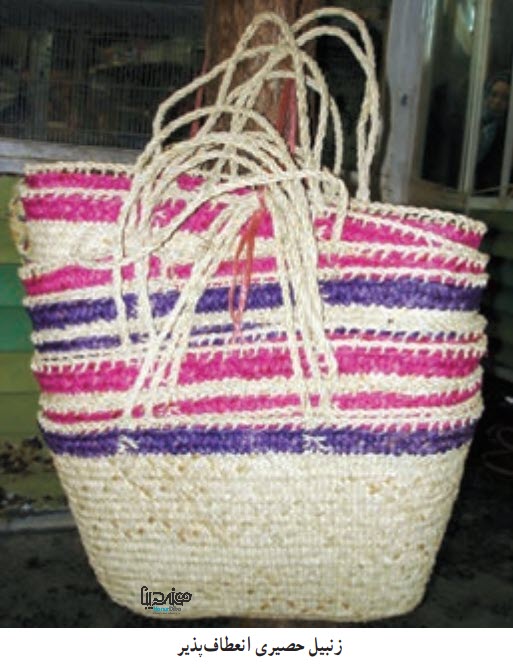
Some weaving works, such as carpets and velvet fabrics, have fluff, some, such as cloth and rugs, are smooth and without fluff, and some, such as mats, have a rough and mesh surface. Many of these products (carpet, felt, rugs, etc.) are flexible, and some of them (such as containers and wicker objects, works woven from plant branches, etc.) have less of this feature or are not flexible at all.
technology (production method)
tools:
All kinds of knives and hooks, looms, all kinds of weaving looms and their parts, daftin, dafe, combs, knitting needles, all kinds of weaving machines and their parts are necessary for weaving.
Is.
material :
Woolen fibers, spun silk, cotton and woolen yas in different diameters and colors, non-woven cotton and woolen threads, cellulose threads (from branches, stems and leaves of plants) are the most important materials and materials needed in weaving works.
Method of production:
Some handwovens do not need special tools and facilities and all the stages of their production are done by hand and simple tools, which are felt and mats.
Some are produced with the help of simple tools and weaving looms, such as carpets, rugs, and gabeh (woven looms). Some others are produced with simple weaving machines, such as Jajim, Zilo, and Karbas, and some are woven with more complex machines, such as velvet, zari, and cashmere (machine weaving).
According to the definition that was presented at the begiing of weaving and weaving works. This basic point should be known more than getting to know the types of traditional handwovens, that warp and weft and knots are achieved with piles of the main components, which are intertwined and interwoven in different ways and by the weaver with the help of tools and facilities. be. In the following articles, we will lea about traditional weaving methods and their types of products.